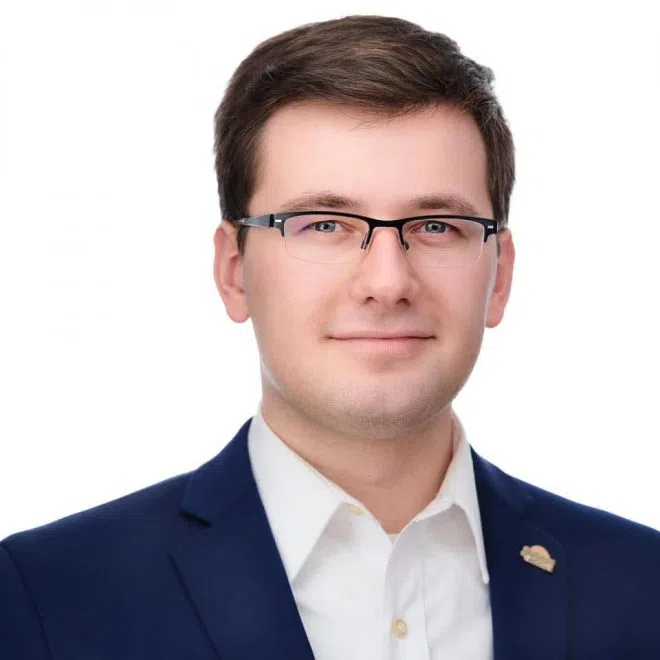
September 24th in New York City was busy, to say the least. Leaders from around the globe were meeting at the United Nations, and not too far away, another meeting was called to order.
When having a seat at the table with much larger cities like Chicago, Cleveland, Toronto, Duluth and Quebec, being the Chairman of the Board is a position that according to Sheboygan Mayor Ryan Sorenson enables Sheboygan to “definitely punch above its weight.” Mayor Sorenson was in the Big Apple to head up a meeting of the Great Lakes and St. Lawrence Cities Initiative, a collection of some 350 cities within the corridor. “So, you know, no matter the size, big or small, from Toronto to Sheboygan you’re seeing everywhere in between, that’s what makes this so unique: you get the small city perspective, you get the big city perspective, and we kind of “hone it in” onto what’s going to work specifically for our communities.”
All share a common interest economically, and also share enormous fresh water resources while the rest of the globe deals in water scarcity. It’s an enviable position that the Cities Initiative intends to leverage to our advantage. Sorenson pointed out that “You see all the challenges across the country – in the west you see earthquakes and fires; in the south you see extreme heat and hurricanes, you know, that can be detrimental to the economy. We’re blessed living in the Midwest where we don’t have to really be worried about those natural disasters. Yeah, we get some snow and tornadoes here & there, but not as detrimental as you do in other parts of the country, so we see, definitely, that paradigm shift when folks are making business decisions on where they want to relocate companies, and I think that you’re going to see that in the next five years a trend-change for industries and economies to grow in the Midwest because we’re not being impacted by those natural disasters. And we want to position ourselves so that we’re protecting our water, doing it smart, we’re planning it correctly, focusing on creative energy uses as well.”
The plan presents a 10-year blueprint to help the region’s communities prepare for and capitalize on the historic opportunity to transform the regional economy into a world-renowned Fresh Coast Economic Corridor. “Manufacturing is still our bread-and-butter, but how do we enhance our waterfront, recreation, tourism…and it’s really kind of redefining our economy, doubling down on what we’re strong on, but making sure that we prepare our economy for the future as well. So I think that’s the big premise of this plan that’s been in the works for two years”
Achieving the economic goals while protecting the resources won’t be easy. Sorenson called it a “moon-shot” goal, and said “I think that’s why we want to be pro-active, because I think you’re going to see population and economy shifts regardless. So we want to be proactive where we’re protecting our quality of life, protecting our water and resources, but also understanding the impact that natural disasters have across the country, you’re going to see that shift to the Midwest, and that’s why we want to be proactive, and that’s why the Cities Initiative laid out this plan.”
One issue that could be exacerbated by the influx of people and business is the shortage of affordable housing, something Sorenson acknowledged as a key point, saying that “If we’re going to be strategic and want to position ourselves in this, we have to build all types of housing: affordable, workforce, single-family homes, duplexes, multiplexes…that has to be part of our plan, too.
Those wishing to dig into the plan’s details can do so here.





Comments